



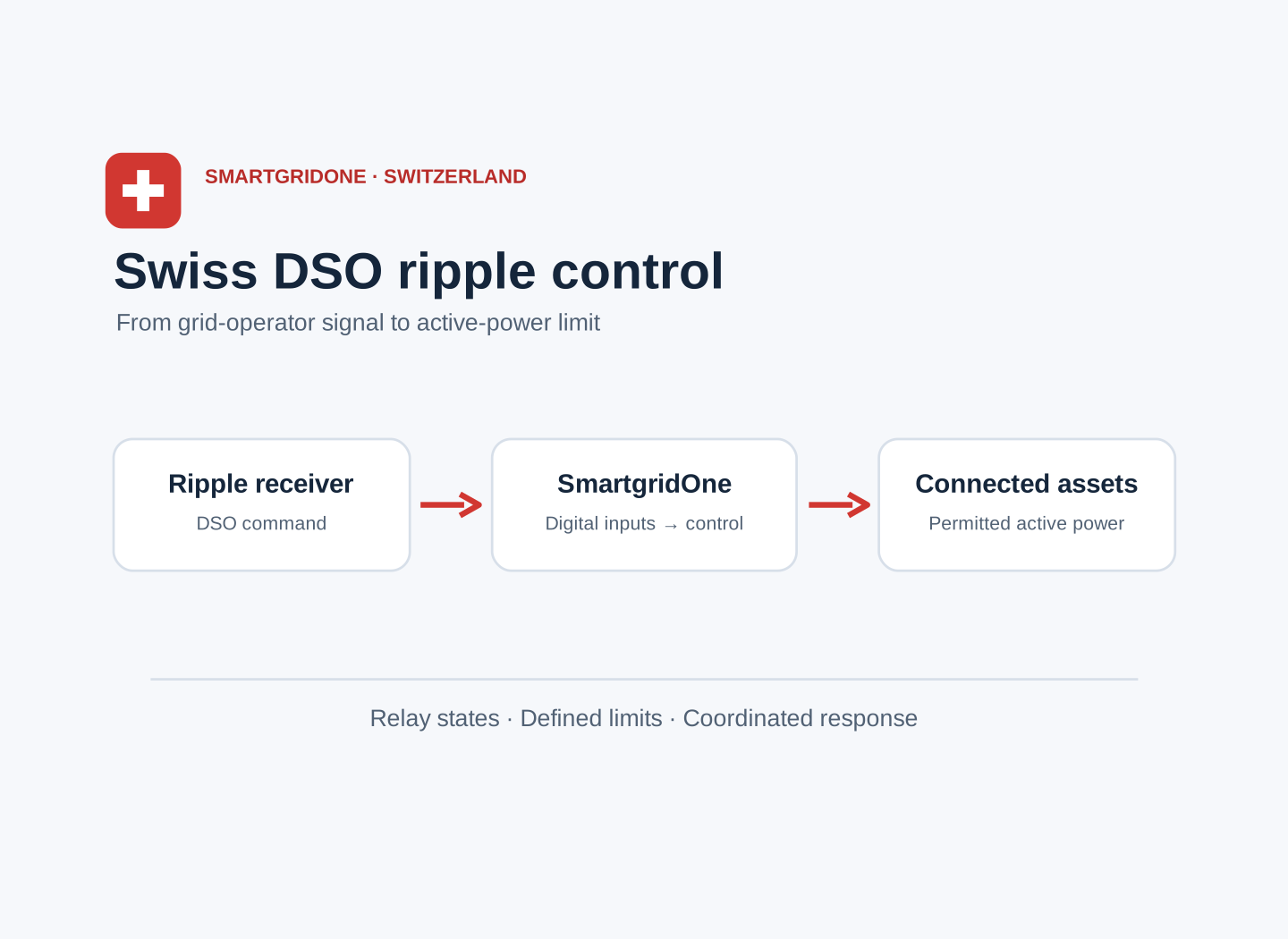
Swiss grid operators may require an installation to react to remote commands from a ripple-control receiver. SmartgridOne reads the approved relay states and applies the corresponding active-power limit to selected solar, storage or flexible-load assets.
Swiss distribution system operators can require photovoltaic, battery and flexible-load installations to respond to external grid-control signals. In many projects, these commands arrive through a ripple-control receiver with several relay contacts. SmartgridOne can read those approved contact states and translate them into a clear operating limit for the connected assets.
The video below shows the practical chain from the grid operator's command to a controlled installation. You can watch it directly on this page.
A ripple-control receiver typically exposes several potential-free contacts. Every permitted combination represents an instruction, such as unrestricted operation, a reduced feed-in level or a complete curtailment request. SmartgridOne monitors these inputs, maps each valid combination to the required percentage and applies that limit to the relevant inverter, battery or controllable load.
This central mapping is especially useful in mixed-brand installations. Instead of building a separate hard-wired response for every device, staller defines the grid-operator logic once in the EMS. SmartgridOne then coordinates the assets while retaining the local installation's own safety functions and manufacturer limits.
Grid control is rarely the only objective of an energy project. The same installation may also need to maximise self-consumption, charge a battery, limit peaks or follow an energy price signal. SmartgridOne keeps the DSO instruction as a hard operating constraint and optimises the remaining flexibility within that boundary. That gives the project one coordinated control layer instead of several competing automations.
The exact wiring and limits must always be checked against the current requirements of the responsible Swiss grid operator. The documentation below gives installers the technical starting point for configuration and validation.
Swiss distribution system operators can require photovoltaic, battery and flexible-load installations to respond to external grid-control signals. In many projects, these commands arrive through a ripple-control receiver with several relay contacts. SmartgridOne can read those approved contact states and translate them into a clear operating limit for the connected assets.
The video below shows the practical chain from the grid operator's command to a controlled installation. You can watch it directly on this page.
A ripple-control receiver typically exposes several potential-free contacts. Every permitted combination represents an instruction, such as unrestricted operation, a reduced feed-in level or a complete curtailment request. SmartgridOne monitors these inputs, maps each valid combination to the required percentage and applies that limit to the relevant inverter, battery or controllable load.
This central mapping is especially useful in mixed-brand installations. Instead of building a separate hard-wired response for every device, the installer defines the grid-operator logic once in the EMS. SmartgridOne then coordinates the assets while retaining the local installation's own safety functions and manufacturer limits.
Grid control is rarely the only objective of an energy project. The same installation may also need to maximise self-consumption, charge a battery, limit peaks or follow an energy price signal. SmartgridOne keeps the DSO instruction as a hard operating constraint and optimises the remaining flexibility within that boundary. That gives the project one coordinated control layer instead of several competing automations.
The exact wiring and limits must always be checked against the current requirements of the responsible Swiss grid operator. The documentation below gives installers the technical starting point for configuration and validation.


.svg)
.svg)
.svg)

.svg)

.svg)


