



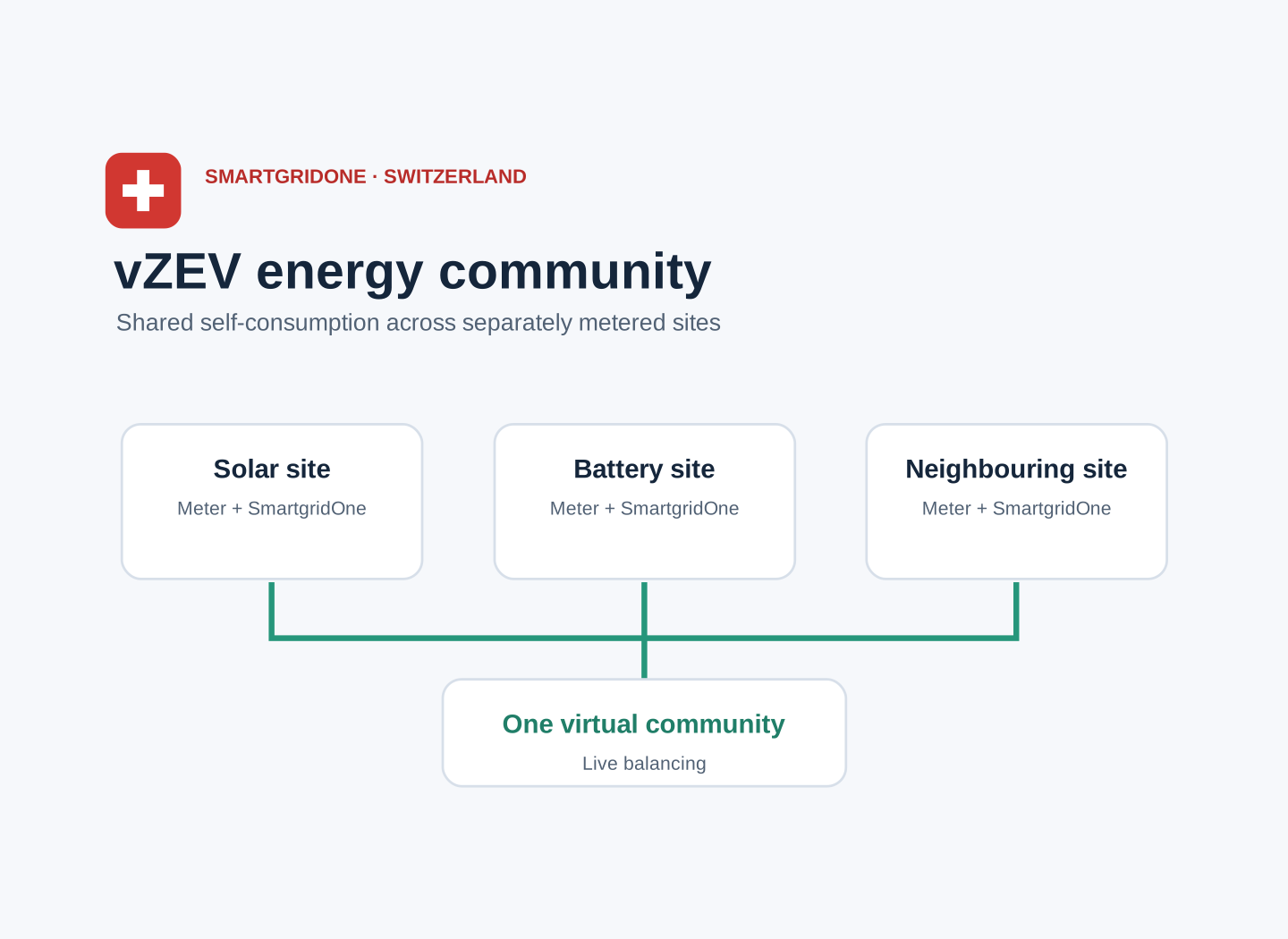
vZEV lets separately metered Swiss sites pool their grid import and export as one virtual energy community. SmartgridOne coordinates compatible batteries and solar inverters so locally generated energy can be used more effectively across participating sites.
The video explains how SmartgridOne can support a virtual self-consumption community in Switzerland. It is embedded below.
Installers, property owners and project developers can see the complete concept without leaving the article.
A vZEV allows several separately metered Swiss consumption points to participate in one virtual self-consumption community. Solar production can be allocated across participating units without requiring every apartment, building or commercial unit to sit behind one physical meter. That opens the door to more practical energy communities in existing properties where a complete electrical rebuild would be difficult or disproportionate.
The commercial and regulatory framework is defined by the relevant Swiss rules, the grid operator and the metering setup. SmartgridOne does not replace those agreements. Its role is to make the controllable assets work together: monitoring production and consumption, coordinating compatible batteries and inverters, and applying the project's chosen operating strategy.
A vZEV is not only an accounting exercise. The value of locally produced energy depends on when it is available and when participants consume it. SmartgridOne can use measurements from the site to decide when a battery should charge or discharge, when flexible loads can run and how solar generation should be used within the agreed technical limits.
This becomes particularly useful when a property contains equipment from different manufacturers. A single EMS can provide a common control layer for compatible PV inverters, batteries, charging stations and heat pumps. The installation remains modular, while the energy strategy is managed centrally.
Once the basic vZEV setup is working, the same SmartgridOne installation can support additional objectives such as dynamic price optimisation, grid-control requirements and demand limitation. Those strategies must be configured so that legal, contractual and technical constraints always take priority.
For a reliable implementation, begin with the current Swiss vZEV requirements and the instructions of the responsible DSO. Then verify that all selected devices are supported and complete a full commissioning test before handover.


.svg)
.svg)
.svg)

.svg)

.svg)


