



Polish distribution system operators (DSOs) are placing increasingly strict requirements on the control of photovoltaic plants. When a plant contains several inverters, the DSO may need to limit or shut down the complete installation as one coordinated system.
SmartgridOne can serve as the central, project-specific integrator between the DSO and every participating inverter. One external command is validated, translated and distributed to the connected devices, so the DSO can control the entire PV plant through a single interface.
Important: Interface requirements differ between Polish DSOs and connection types. The architecture described here is a design pattern, not a pre-approved configuration. Always obtain the DSO’s current technical requirements before engineering and commissioning the site.
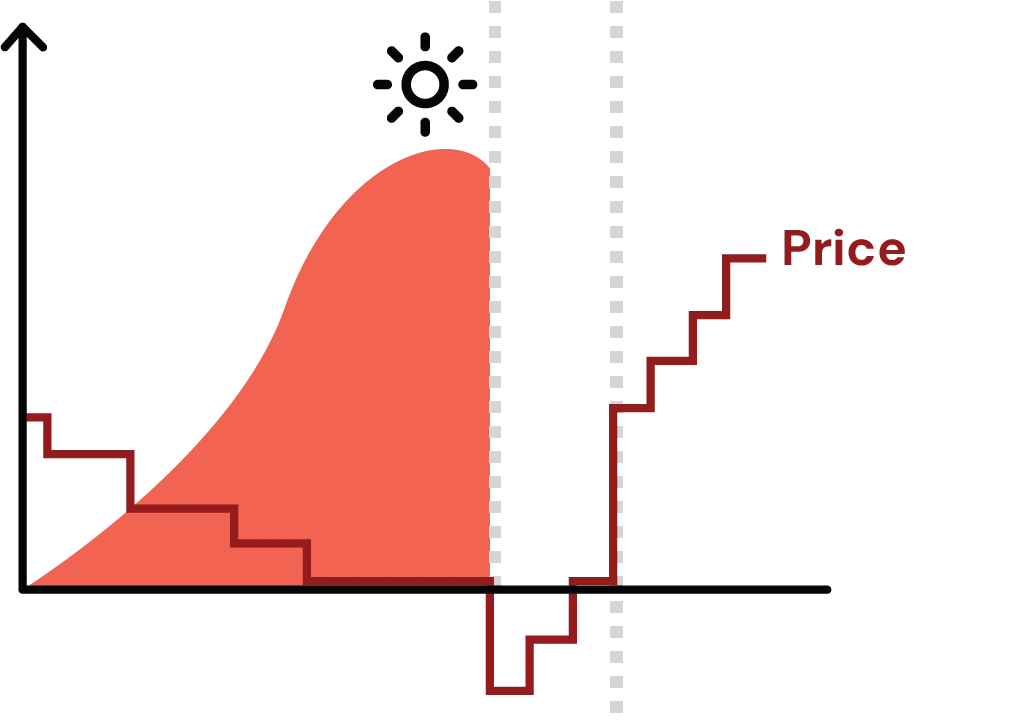
The DSO does not have to address each inverter separately. It sends one plant-level command to SmartgridOne, which applies the appropriate instruction to every selected inverter. This enables the complete PV plant to be:
PV plants do not always consist of identical inverters. Extensions in particular may combine different brands, models, nominal powers and communication interfaces.
SmartgridOne can bring several devices and protocols together within one installation. Each inverter remains individually addressable by the controller, while the DSO sees and controls one coordinated plant.
This architecture is suitable for:
For multi-inverter plants, Polish DSOs commonly request one shared controller. Communication with that controller is often implemented through RS485 and the SunSpec protocol.
SmartgridOne acts as the central gateway: it receives the external command and converts it into the correct instructions for the connected inverters. Depending on the project, the connection may use RS485, Ethernet or an appropriate protocol converter.
The exact interface, SunSpec configuration, command set, scaling and feedback requirements must follow the technical specification of the DSO involved in the project.
Not every inverter provides Modbus or another usable external-control protocol. Such devices can still be included in some projects by letting SmartgridOne operate an external relay or contactor.
Caution: A relay or contactor provides full on/off control only. Accurate active-power limiting is possible only when the inverter supports the required command through its communication interface. The electrical shutdown circuit must be designed and installed by qualified personnel.
An integrator design must define what happens when communication with the DSO or a controlled device is interrupted. SmartgridOne supports watchdog and fallback functions so that an agreed safe state can be applied when no valid control command is received within a configured time.
Depending on the DSO’s requirements, the plant can be configured to:
The selected fail-safe behaviour must be verified during engineering and tested as part of commissioning.
Because requirements vary by Polish DSO and connection type, Eniris reviews each integrator solution individually. The review covers at least:
This creates one central, coordinated and future-ready control system for the complete PV plant.
To assess a multi-inverter project, provide Eniris with:
Submit the available technical information through the Eniris integration request form. Eniris will determine the appropriate SmartgridOne configuration and identify any project-specific engineering or hardware requirements.
For the full technical reference, see the SmartgridOne documentation for Polish DSO control.


.svg)
.svg)
.svg)

.svg)

.svg)


