



In this article, we dive into the technical realization: from the PPC module connection to the complex Metering Concept D5.
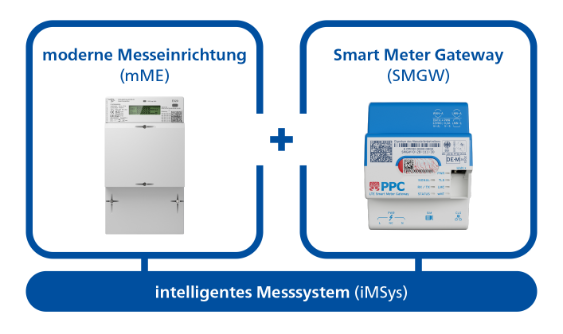
In the German market, the Smart Meter Gateway (SMGW) from PPC (Power Plus Communications), Theben, … is the standard for secure data communication. For our EMS, the PPC module (SMGW-O-2B-111-30) is not just a meter—it is the secure gateway for real-time control.
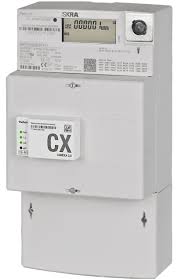
Our software communicates directly with this gateway to retrieve data from a wide range of meters (such as the ISKRA MT631 or eBZ devices). The goal? Managing a 1:11 ratio, where a single gateway unlocks data from 11 different meters for our optimization algorithms.
A vital component of this project is Metering Concept D5. This setup is specifically designed for multi-unit buildings where "Collective Building Supply" (Gemeinschaftliche Gebäudeversorgung) is central.
In an MK D5 configuration, all energy flows within a building are mapped in detail through a cascade connection:
The Eniris EMS uses the data from this cascade to determine exactly how much solar energy is available for residents at any given moment versus how much should be stored in the battery.
The Eniris platform goes far beyond basic monitoring. For this project, we are implementing several crucial high-level functions:
A unique advantage of our system is its flexibility. If the resident structure changes (for example, if 6 out of 11 tenants participate), our EMS can be adjusted instantly via the API. No site visit is required to change the battery's control logic or the data basis for charging/discharging.
By integrating with the PPC module, the installation is ready for the future. Control signals from the Grid Operator (DSO) to limit power—to protect the local grid—can be directly translated by the Eniris EMS into actionable commands for the battery or EV charging infrastructure.


.svg)
.svg)
.svg)

.svg)

.svg)


